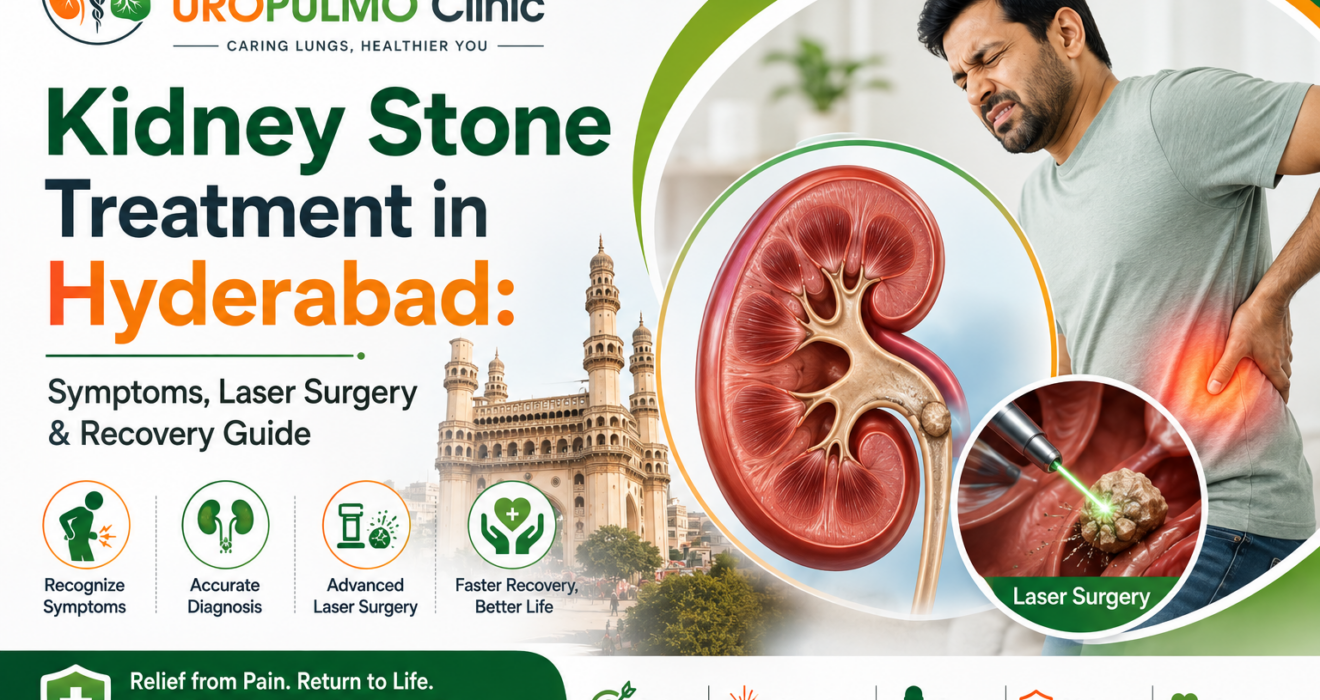
Kidney Stone Treatment in Hyderabad: Symptoms, Laser Surgery & Recovery Guide
Introduction
Kidney stones can cause sudden and intense pain, often beginning in the back or side and sometimes spreading toward the abdomen or groin. Depending on their size and location, some stones may pass naturally, while larger or obstructing stones may require medical or surgical treatment.
Symptoms such as severe flank pain, blood in the urine, painful urination, nausea, vomiting or frequent urination should not be ignored. Early evaluation by a urologist can help determine the size and location of the stone and identify the most appropriate treatment.
For people searching for Kidney Stone Treatment in Hyderabad, Shivam Uro Pulmo Clinic provides specialized urology care, including kidney stone treatment and laser kidney stone treatment as part of its urological services. The clinic’s urology team includes Dr. Bharath Kumar Reddy.
What Are Kidney Stones?
Kidney stones are hard deposits that form when certain minerals and salts in urine become concentrated and crystallize. Stones can develop in the kidneys and may move into the ureters, the tubes that carry urine from the kidneys to the bladder.
Kidney stones can vary considerably in size. Very small stones may pass through the urinary tract without a procedure, whereas larger stones may become lodged and obstruct urine flow.
A stone that blocks the urinary tract can cause significant pain and, particularly when associated with infection, may require prompt medical treatment.
Common Symptoms of Kidney Stones
Kidney stone symptoms can vary depending on the stone’s size and location.
Common symptoms include:
- Severe pain in the side or back
- Pain that may move toward the lower abdomen or groin
- Pain that comes and goes in waves
- Blood in the urine
- Burning or discomfort while urinating
- Frequent urge to urinate
- Nausea or vomiting
- Cloudy or foul-smelling urine
- Difficulty passing urine
Shivam Uro Pulmo Clinic identifies severe back or abdominal pain, burning during urination, blood in urine and frequent urination among symptoms associated with kidney stones.
If you experience recurring or severe symptoms, searching for a kidney stone doctor near me and arranging a urological evaluation is preferable to repeatedly relying on pain medication without identifying the cause.
When Is Kidney Stone Pain an Emergency?
Some kidney stone symptoms require urgent medical attention.
Seek immediate medical care if you have:
- Severe or unbearable pain
- Fever or chills along with urinary symptoms
- Repeated vomiting
- Difficulty or inability to pass urine
- Significant blood in the urine
- Severe weakness or feeling very unwell
- Known kidney obstruction accompanied by fever
A blocked urinary tract combined with infection can become serious. Prompt assessment is particularly important when fever and severe flank pain occur together.
What Causes Kidney Stones?
Several factors can increase the likelihood of kidney stone formation.
Low Fluid Intake
Not drinking enough water can make urine more concentrated, increasing the likelihood of crystal formation.
Dietary Factors
Depending on the type of stone, high intake of certain dietary components may contribute to stone formation.
Family History
Some people have a higher tendency to develop kidney stones because of genetic or familial factors.
Previous Kidney Stones
People who have had a kidney stone previously may be at increased risk of developing another stone.
Certain Medical Conditions
Some metabolic and urinary conditions can increase the risk of stone formation.
Certain Medications
Some medications can influence the concentration of substances in urine and may contribute to stone formation in susceptible individuals.
Because the causes of kidney stones differ from person to person, recurrent stone formers may benefit from a detailed urological and metabolic evaluation.
How Are Kidney Stones Diagnosed?
A urologist may use several methods to evaluate suspected kidney stones.
Medical History and Physical Examination
Your doctor may ask about the location and intensity of pain, urinary symptoms, previous stones, fluid intake, diet and medical history.
Urine Testing
Urine testing can help identify blood, infection and other abnormalities that may provide clues about the underlying problem.
Blood Tests
Blood tests may be recommended to evaluate kidney function and identify certain abnormalities associated with stone formation.
Imaging
Imaging tests can determine whether a stone is present and provide information about its size and location.
The diagnostic approach depends on the patient’s symptoms, clinical condition and suspected stone characteristics.
Kidney Stone Treatment in Hyderabad
The right treatment depends on factors such as:
- Stone size
- Stone location
- Degree of urinary obstruction
- Symptoms
- Presence of infection
- Kidney function
- Previous stone history
- Likelihood of natural passage
Small stones that are likely to pass naturally may sometimes be managed with hydration, pain control and medical observation under professional guidance.
Larger, obstructing or problematic stones may require a procedure to remove or fragment the stone.
At Shivam Uro Pulmo Clinic, kidney stone treatment and laser kidney stone treatment are listed among the clinic’s urology services.
What Is Laser Kidney Stone Surgery?
Laser stone surgery is a minimally invasive approach used to fragment certain kidney or urinary tract stones.
During an endoscopic laser procedure, the urologist accesses the urinary tract using specialized instruments and uses laser energy to break the stone into smaller fragments. Depending on the procedure and stone characteristics, fragments may then be removed or allowed to pass naturally.
Laser treatment can be particularly useful for stones that are unlikely to pass on their own or that are causing significant symptoms or obstruction.
The exact procedure recommended depends on the stone’s size, location, anatomy and the patient’s overall health.
Benefits of Kidney Stone Laser Surgery
When clinically appropriate, laser stone treatment may offer several advantages:
- Minimally invasive approach
- No large external surgical incision
- Direct access to the stone
- Ability to fragment stones into smaller pieces
- Suitable for selected stones that may not pass naturally
- Potentially shorter recovery than some traditional surgical approaches
However, no procedure is appropriate for every stone. A urologist should evaluate the stone before recommending laser treatment.
Is Laser Kidney Stone Treatment Safe?
Laser stone procedures are routinely used in modern urological practice, but every medical procedure has potential risks.
Possible complications can include bleeding, infection, urinary discomfort, injury to the urinary tract, residual stone fragments or the need for additional treatment.
Your urologist should explain the expected benefits, risks and alternatives based on your individual condition.
What Happens During Kidney Stone Laser Surgery?
The exact technique varies depending on the stone and the selected procedure, but treatment generally involves several stages.
Step 1: Preoperative Evaluation
The urologist reviews your symptoms, imaging, laboratory results and medical history.
Step 2: Anesthesia
The procedure is generally performed under appropriate anesthesia so that the patient does not experience procedural pain.
Step 3: Accessing the Urinary Tract
The urologist uses specialized instruments to reach the stone through the urinary passage.
Step 4: Laser Fragmentation
Laser energy is used to break the stone into smaller fragments.
Step 5: Stone Fragment Management
Depending on the stone and procedure, fragments may be removed using specialized instruments or left small enough to pass naturally.
Step 6: Postoperative Monitoring
The patient is monitored after the procedure and receives recovery instructions based on the individual treatment.
Kidney Stone Surgery Recovery
Recovery depends on the procedure performed, stone characteristics and individual health.
After treatment, some patients may experience temporary:
- Mild urinary discomfort
- Increased urinary frequency
- Blood-tinged urine
- Mild flank discomfort
- Fatigue
Your urologist will provide specific instructions regarding hydration, medication, physical activity and follow-up.
If a temporary ureteral stent has been placed, the doctor will explain its purpose and when it should be removed.
How Long Does Recovery Take?
Recovery time varies from patient to patient. Minimally invasive stone procedures often allow patients to return to routine activities relatively quickly, but the exact timeline depends on the procedure, stone burden and individual recovery.
It is important not to compare your recovery with another patient’s experience. Follow the instructions provided by your urologist.
What to Expect After Laser Kidney Stone Surgery
Your doctor may recommend:
- Adequate fluid intake, unless medically restricted
- Taking prescribed medication as directed
- Avoiding strenuous activities temporarily
- Attending scheduled follow-up appointments
- Completing any recommended imaging
- Following instructions regarding a ureteral stent, if one was placed
Contact your doctor promptly if you develop fever, severe pain, inability to urinate, significant bleeding or other concerning symptoms after the procedure.
Can Kidney Stones Come Back?
Yes. Having one kidney stone does not guarantee that another stone will not form in the future.
Prevention is therefore an important part of long-term kidney stone care.
Stay Adequately Hydrated
Drinking enough water helps dilute urine and can reduce the concentration of stone-forming substances. Individual fluid requirements vary, particularly for people with kidney, heart or other medical conditions.
Follow Personalized Dietary Advice
There is no single diet that works for every type of kidney stone. Dietary recommendations should ideally be based on the type of stone and individual risk factors.
Maintain a Healthy Lifestyle
Regular physical activity, maintaining a healthy weight and following a balanced diet can support overall urinary and kidney health.
Attend Follow-Up Evaluations
Patients with recurrent stones may require additional evaluation to understand why stones are forming and how future episodes can be reduced.
Why Choose Shivam Uro Pulmo Clinic for Kidney Stone Care?
Shivam Uro Pulmo Clinic is a dedicated healthcare center providing urology and pulmonology services in Hyderabad. The clinic states that it focuses on accurate diagnosis, modern treatment approaches and personalized patient care.
Its listed urology services include:
- Kidney Stone Treatment
- Laser Kidney Stone Treatment
- Minimally Invasive Urology Surgery
- UTI Treatment
- Prostate Treatment
- Bladder Problems Treatment
- Kidney and urinary tract care
- Uro-oncology treatment
- Varicocele surgery
The clinic’s urology team includes Dr. Bharath Kumar Reddy, Expert Urologist, according to the clinic’s website.
For patients searching for a kidney stone specialist in Hyderabad, appropriate diagnosis and individualized treatment planning can help determine whether observation, medical management or a stone-removal procedure is most suitable.
Frequently Asked Questions About Kidney Stones
Can every kidney stone be removed with laser surgery?
No. Treatment depends on the stone’s size, location, number, anatomy and the patient’s medical condition. Some small stones may pass naturally, while others may require a different procedure.
Is kidney stone laser surgery painful?
The procedure is performed using appropriate anesthesia. Some temporary discomfort, urinary symptoms or mild blood in the urine may occur during recovery.
How long does kidney stone laser surgery take?
The duration varies depending on factors such as stone size, location and number of stones, as well as the specific procedure being performed.
Can kidney stones be treated without surgery?
Some smaller stones can pass naturally with appropriate medical management and observation. Larger or obstructing stones may require a procedure.
Can kidney stones damage the kidneys?
A stone that causes prolonged urinary obstruction can potentially affect kidney function. Infection associated with obstruction can be particularly serious, which is why significant symptoms require timely medical evaluation.
How can I prevent kidney stones from returning?
Adequate hydration, personalized dietary measures, maintaining a healthy lifestyle and addressing underlying risk factors can help reduce recurrence. Patients with recurrent stones should discuss preventive evaluation with a urologist.
Conclusion
Kidney stones can range from small stones that pass naturally to larger stones that cause severe pain or urinary obstruction. Recognizing symptoms early and obtaining appropriate diagnostic evaluation can help determine the safest and most effective treatment.
For selected patients, kidney stone laser surgery can provide a minimally invasive way to fragment and remove problematic stones. However, treatment should always be based on the stone’s characteristics and the patient’s individual medical condition.
If you are looking for Kidney Stone Treatment in Hyderabad, laser kidney stone treatment in Hyderabad, a kidney stone specialist in Hyderabad, a best urologist in Hyderabad, or a kidney stone doctor near me, Shivam Uro Pulmo Clinic provides specialized urology care, including kidney stone and laser stone treatment services.
Contact Shivam Uro Pulmo Clinic
Address: First Floor, Sowbhagya Krishna Square, Shivam Road, opposite Aira Diagnostics, Bagh Amberpet, New Nallakunta, Hyderabad, Telangana 500013
Phone: +91 9014040515
Timings: Monday – Saturday, 6:00 PM – 9:00 PM
Website: Shivam Uro Pulmo Clinic
The clinic’s official contact page confirms the address, phone number and Monday–Saturday 6 PM–9 PM timings.
Medical Disclaimer: This article is intended for general health education and does not replace consultation, diagnosis or treatment from a qualified healthcare professional.